Best Paint for Radiators and Pipework: The London Guide
When you are renovating a period townhouse in Chelsea or a modern apartment in Battersea, the focus is usually on the walls and ceilings. However, nothing ruins a high-end finish faster than yellowing, chipped radiators and exposed copper pipework. At The Painters London, we’ve seen how the right radiator treatment can transform a room from "tired" to "tailored."
Radiators and pipework are functional necessities, but in the eyes of a professional decorator, they are architectural features. Whether you want them to disappear into the background or stand out as a bold statement, choosing the right product is essential. Heat-induced expansion and contraction mean that standard wall emulsion simply won't cut it.
In this guide, our team at The Painters London shares the professional secrets to selecting and applying the best paint for radiators and pipework in your London home.
Why You Can’t Just Use Standard Wall Paint
It is a common mistake we see during interior painting projects across South East London. Homeowners often try to use the leftover emulsion from their walls on their radiators. While it might look okay for a week, it will quickly fail.
1. Heat Sensitivity: Standard emulsions are not designed to withstand the fluctuating temperatures of a central heating system. The paint will eventually become brittle and crack. 2. Adhesion Issues: Metal is non-porous. Without the correct primer and paint type, the finish will peel off in sheets. 3. Yellowing: Traditional oil-based glosses are notorious for yellowing over time, especially when exposed to the heat of a radiator in a sunny Greenwich conservatory.
Choosing the Right Finish: The Professional’s Toolkit
When we are commissioned for house painting in London, we select radiator paints based on the property’s style and the client’s desired aesthetic.
1. Water-Based Satin and Eggshell
Modern water-based technology has come a long way. Brands like Little Greene and Farrow & Ball offer Intelligent Gloss or Modern Eggshell finishes that are heat-resistant up to a point and, most importantly, do not yellow. * Best for: Most London homes, especially if you want to match the radiator to the wall colour for a seamless "colour-drenching" look.2. Specialist Radiator Enamels
If you want a factory-tough finish, specialist radiator enamels (available from Dulux Trade) are designed specifically for this purpose. They are highly resistant to knocks and scrapes—essential for high-traffic areas like hallways in Clapham family homes.3. High-Heat Sprays
For a perfectly smooth, brush-mark-free finish, specialist spray paints are an option. However, these require extensive masking of the surrounding area. The Painters London often recommends professional spraying for ornate, Victorian cast-iron radiators to ensure every crevice is covered.Matching Your Radiator to London Property Styles
London's diverse architecture requires different approaches to radiator decoration.
Victorian and Edwardian Homes (Kensington & Dulwich)
If you are lucky enough to have original cast-iron radiators, don't hide them. The Painters London recommends using deep, heritage tones from Little Greene like Invisible Green or basalt. A metallic finish, such as pewter or bronze, can also highlight the intricate scrollwork common in Dulwich period properties.Modern New Builds (Canary Wharf & Nine Elms)
In contemporary apartments, radiators are often basic panel styles. Here, the goal is usually to make them "disappear." By using the same colour as your feature walls in a matching satin finish, you can minimise the visual clutter of the room.The Importance of Priming Pipework
Exposed copper pipework is a common sight in older South East London conversions. If you want to paint these pipes, you must use a multi-surface primer first. Copper is notorious for reacting with certain paints, leading to green staining (verdigris) seeping through the topcoat. The Painters London always uses a high-quality primer like Zinsser BIN or a dedicated metal primer to ensure a permanent bond.
Step-by-Step: How The Painters London Achieves a Flawless Finish
If you’re tackling a small radiator yourself, follow our professional process:
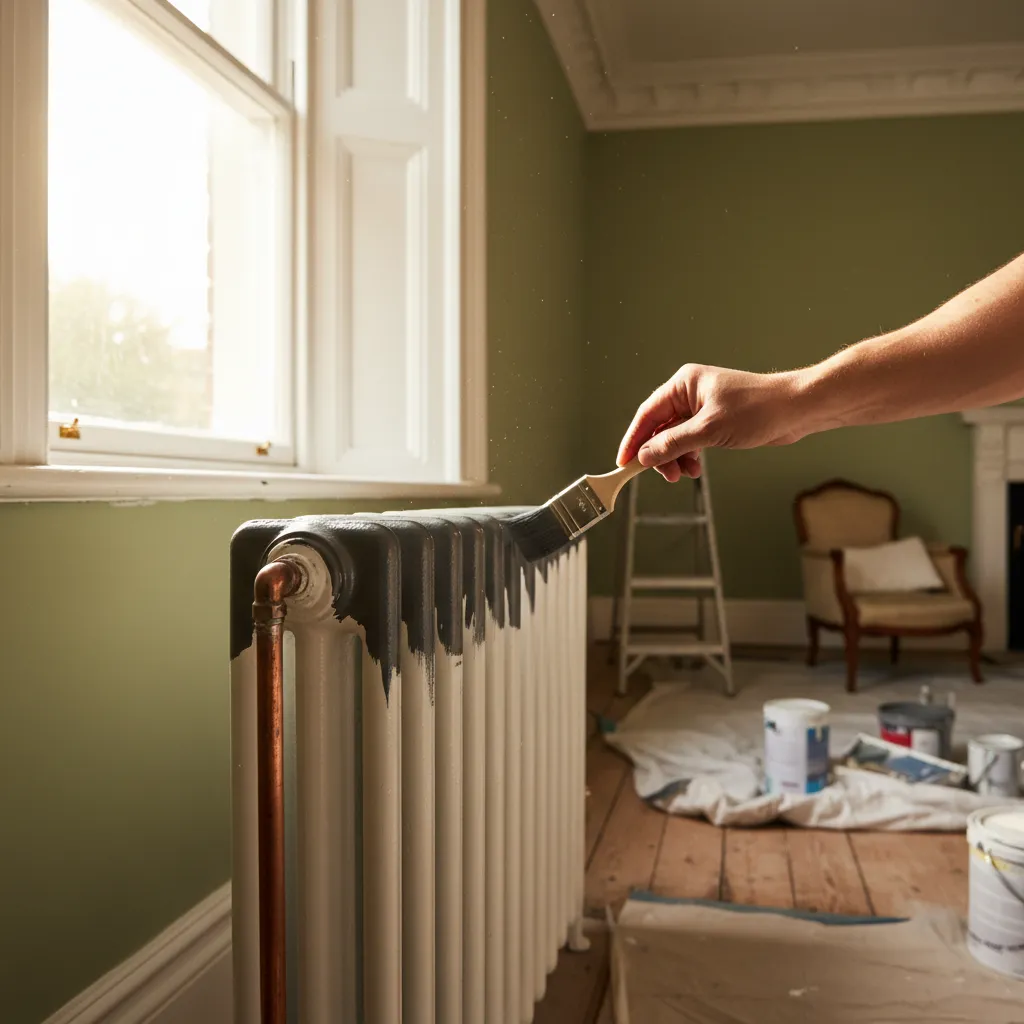
1. Turn off the heating: Never paint a hot radiator. The paint will dry too fast, leaving visible brush marks and preventing proper leveling. 2. Preparation is key: Sand the surface lightly with fine-grade sandpaper to create a "key." Wash it down with sugar soap to remove grease and dust. 3. Treat Rust: If you see spots of rust (common in bathrooms), treat them with a rust-inhibiting primer before proceeding. 4. Protect the Area: Use heavy-duty drop cloths and masking tape. Paint drips on Richmond oak flooring are a headache you don't want. 5. Thin Coats: Apply two thin coats rather than one thick one. This prevents drips and "runs" in the paint.
Trends: Should Radiators Be an Accent or Invisible?
Currently, in areas like Shoreditch and Peckham, we are seeing a trend toward bold, contrasting radiators. Imagine a crisp white room with a radiator painted in a vibrant terracotta or deep navy. It turns a utility item into a piece of industrial art.
Conversely, in the traditional enclaves of Belgravia and Mayfair, the preference remains for "invisible" radiators that match the wall perfectly, often using the sophisticated palettes of Farrow & Ball.
Frequently Asked Questions
Can I paint my radiator with Farrow & Ball Estate Emulsion?
No. Estate Emulsion is a chalky, breathable paint designed for walls. For radiators, you should use Farrow & Ball Modern Eggshell or Full Gloss, which are tougher and heat-resistant.How do I stop my white radiator from turning yellow?
Yellowing is usually caused by the oil in traditional solvent-based paints reacting to heat and lack of natural light. To prevent this, The Painters London recommends using high-quality water-based "satinwood" or "eggshell" finishes, which stay white for years.Do I need to remove the radiator to paint it?
While you can get a good finish with the radiator on the wall using a "long-reach" radiator brush for the back, removing it allows for a truly professional, 360-degree finish. If we are performing a full renovation, we often coordinate with plumbers to have radiators removed and painted off-site or in a dedicated prep area.Why Choose The Painters London?
Achieving a durable, high-end finish on metal surfaces requires patience and the right technical knowledge. Whether you are refreshing a single room or looking for a full property transformation, The Painters London brings years of expertise to every project across Central and South East London. We pride ourselves on meticulous preparation and using the finest materials to ensure your home looks stunning for years to come.
Ready to refresh your home’s interior? From radiators to wallpapering, we’ve got you covered.
Contact The Painters London today for a free, no-obligation quote.
Practising London painters & decorators since 2019 — every guide is written and reviewed by our working team. About the authors →