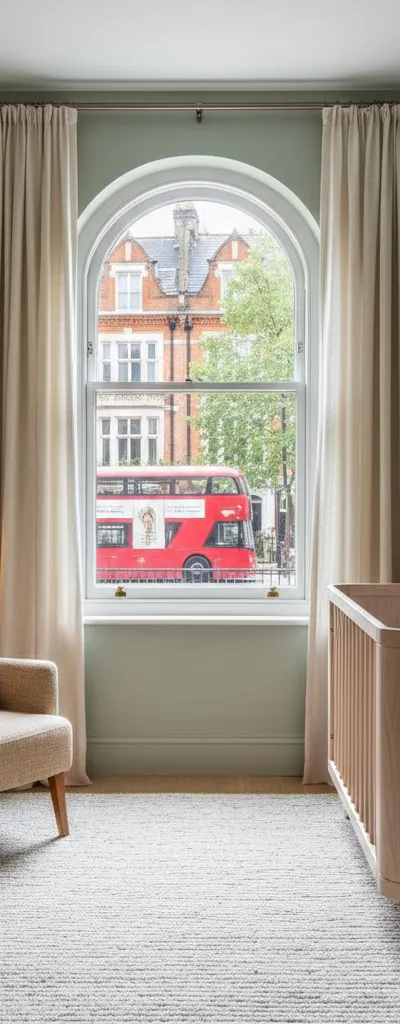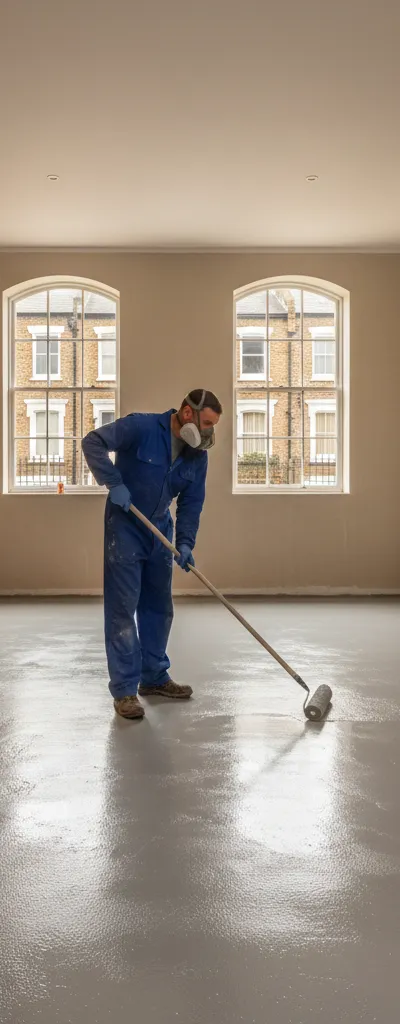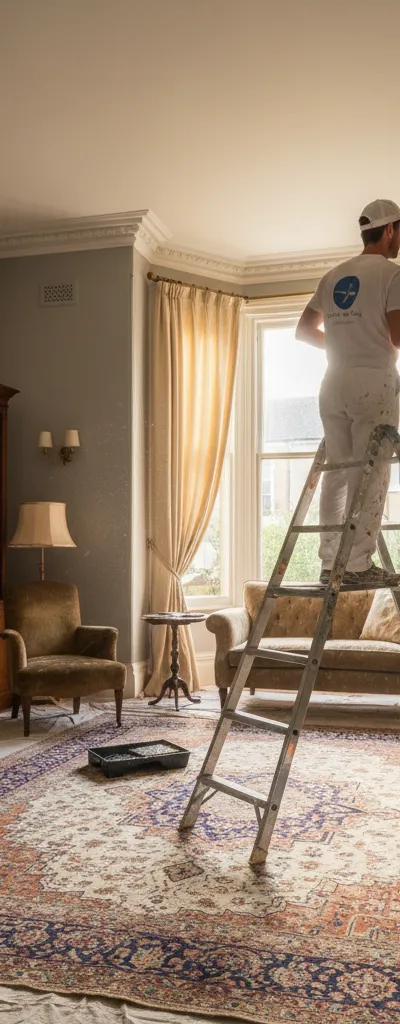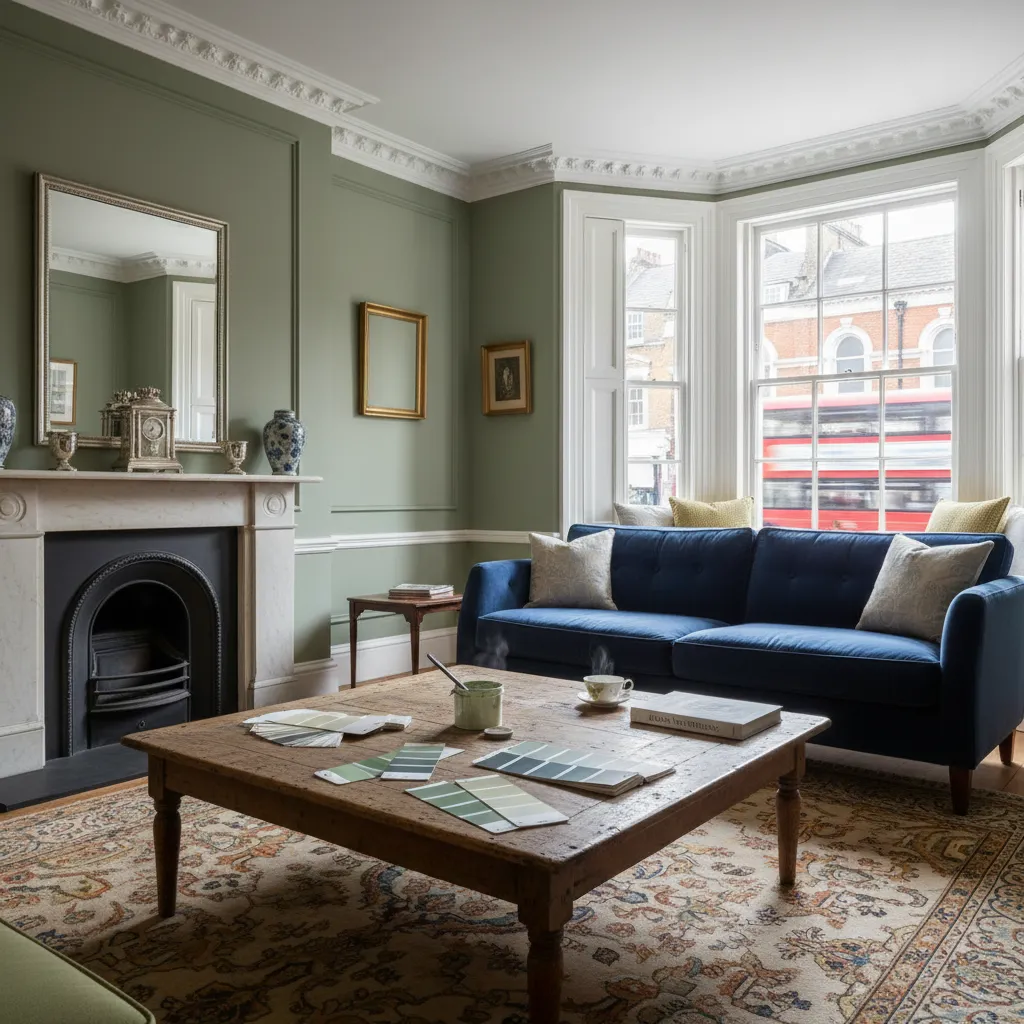
At The Painters London, we’ve spent years navigating the unique challenges of the capital’s housing stock. We know that the light hitting a basement flat in Chelsea is vastly different from the sun flooding an Edwardian semi in Dulwich. To help you make the right choice, our team has put together this comprehensive guide on selecting palettes that honour your property’s heritage while reflecting your personal style.
The Architectural DNA: Matching Colour to Style
London is an architectural patchwork quilt. Each era brought with it a specific set of proportions, window sizes, and ceiling heights—all of which play a massive role in how paint behaves on your walls.
Georgian Grandeur (1714–1830)
Georgian properties, commonly found in areas like Islington or Marylebone, are famous for their symmetry and large sash windows. Because these rooms are often blessed with high ceilings and significant natural light, they can handle "dusty" and sophisticated tones.The Painters London recommends: To stay true to the era while keeping it modern, look at Little Greene’s 'French Grey' or 'Slaked Lime'. These shades have a depth that complements the fine plasterwork without feeling heavy. If you want to be bold in a Georgian dining room, a deep navy like 'Hicks' Blue' creates a stunning backdrop for candlelight and original fireplaces.
Victorian and Edwardian Character (1837–1910)
Whether you’re in a terraced house in Clapham or a detached villa in Chislehurst, Victorian homes often feature narrower hallways and intricate coving and cornicing. The Victorian palette was traditionally quite dark—think forest greens and deep reds—but modern London living usually calls for something a bit airier.Our team at The Painters London often suggests using a "split" technique here. Use a darker, grounding colour (like Farrow & Ball’s 'Barents Sea') below the dado rail and a lighter, reflective neutral (like 'School House White') above it. This maintains the character without making the room feel enclosed.
Mid-Century and Post-War Homes
In areas like Blackheath or parts of South East London, you’ll find plenty of mid-century properties. These homes are all about clean lines and functional spaces. Here, you can afford to be more experimental with "muddy" mid-tones—terracottas, olives, and mustard yellows. The Painters London suggests keeping the woodwork crisp and white to let these earthy tones pop.Modern New-Builds and Warehouses
From the dockside apartments of Canary Wharf to the industrial conversions in Hackney, modern spaces often feature large expanses of glass and open-plan layouts. In these properties, the focus shifts to creating "zones." Using a feature wall in a textured finish or a bold charcoal can help define a living area within a large, open space.Considering the London Light
One thing every London homeowner learns eventually is that our light is... fickle. We have a lot of "blue" light due to our northern latitude and frequent cloud cover.
* North-Facing Rooms: These are the trickiest. They can feel cold and slightly grey. Avoid any paint with a blue or green base. Instead, look for shades with yellow or red undertones to inject warmth. 'Setting Plaster' by Farrow & Ball is a perennial favourite for North-facing bedrooms in North London. * South-Facing Rooms: You are among the lucky ones. These rooms are bathed in warm light all day. You can use cooler tones like 'Skylight' or 'Pale Powder' to balance the heat of the sun. * Basement Conversions: Very common in Chelsea and Kensington. Here, the goal is usually to maximise light. However, don't just paint it pure brilliant white—it can look dingy in low light. The Painters London recommends a "warm white" or a very pale stone colour to make the space feel intentional rather than just "bright."
The TPL Guide to Paint Finishes
It’s not just the colour; it’s the sheen level. In our years of providing interior painting services, we’ve seen how the wrong finish can ruin the right colour.
1. Estate Emulsion / Chalky Matt: Best for period walls with slight imperfections. It absorbs light and gives that classic, velvety London look. 2. Modern Eggshell: Essential for kitchens and bathrooms or high-traffic hallways in busy family homes in Wandsworth. It’s scrubbable and durable. 3. Gloss vs. Satin: For exterior painting on a traditional London front door, a high-gloss finish remains the gold standard for luxury. For interior woodwork, we are seeing a huge shift towards "Dead Flat" finishes that match the walls for a seamless, contemporary look.
Exterior Elegance: The London Front Door
Your front door is your home’s handshake. In London, there is a certain "unspoken code" for exterior colours. In Belgravia, you’ll see plenty of high-gloss blacks and deep blues. In the leafier suburbs of Dulwich, homeowners often opt for softer sage greens or even a heritage pink.
When we undertake exterior painting projects, we remind clients that the colour must work with the London stock brick (that yellow/grey hue) or the white stucco. The Painters London recommends 'Railings' by Farrow & Ball for a sophisticated, off-black look that suits almost any London streetscape.
Why Professional Application Matters
You can spend hundreds of pounds on the perfect designer paint, but if the surface preparation isn't right, the colour won't look like it does on the swatch. London homes are old; they move, they settle, and their walls are rarely straight.
Here at The Painters London, we take the time to fill, sand, and prime every surface. This ensures that the deep pigment in premium paints like Little Greene or Dulux Trade Heritage reflects light perfectly. Whether it’s a delicate wallpapering project in a boutique hotel or a full internal repaint of a Victorian terrace, the finish is only as good as the prep.
Our Local Expertise
Having served Central and South East London since 2019, we understand the local nuances. We know the parking restrictions in Kensington, the permits required for scaffolding in Greenwich, and the specific aesthetic expectations of homeowners in areas like Battersea and Clapham. Our local painters aren't just tradesmen; they are experts in the London property market.
Frequently Asked Questions
What is the best paint for a dark London hallway?
We usually recommend avoiding standard brilliant white, which can look grey in shadows. Instead, try a "warm" neutral like Little Greene's 'Rolling Fog Pale' or Farrow & Ball's 'Joppa White'. These have enough pigment to hold their own in low light while still feeling bright.Should I paint my woodwork the same colour as my walls?
This is a very popular trend in London right now, often called "colour drenching." It makes small rooms feel larger because the eye doesn't get interrupted by white skirting boards. The Painters London recommends this for smaller bedrooms or snugs to create a cozy, cocooning effect.How often should I repaint the exterior of my London home?
Due to London’s pollution and weather, we suggest a refresh every 5–7 years for masonry and every 3–4 years for exterior woodwork (like sash windows) to prevent rot. Regular maintenance actually saves you money in the long run.---
Ready to transform your London property with a professional touch? Whether you're in a Victorian terrace or a modern apartment, The Painters London is here to help. Get in touch with us today for a free, no-obligation quote and expert colour advice tailored to your home’s unique style.
Practising London painters & decorators since 2019 — every guide is written and reviewed by our working team. About the authors →