Elevating London Interiors: The Guide to Coving and Cornicing
In the grand townhouses of Kensington and the leafy Victorian terraces of Dulwich, there is one architectural detail that consistently bridges the gap between a standard room and a premium living space: the cornice. Whether you call it coving, cornicing, or decorative moulding, these ceiling transitions are the "frame" for your interior design.
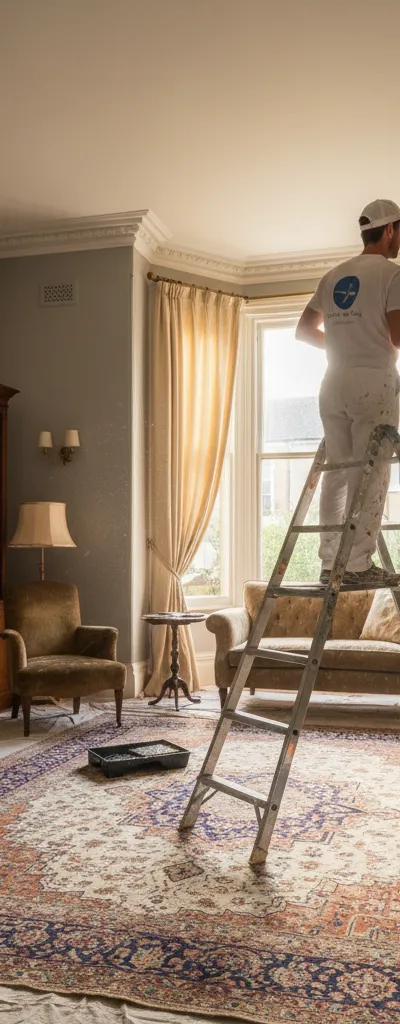
At The Painters London, we’ve seen how the right installation and a meticulous paint finish can transform a flat, uninspiring ceiling into a masterpiece of period elegance or modern minimalism. Since 2019, our team has been helping homeowners across Central and South East London navigate the complexities of choosing, installing, and finishing these essential architectural features.
Why Coving Matters in London Homes
London's architectural heritage is diverse. From the soaring ceilings of Chelsea’s Georgian estates to the snugger proportions of 1930s semis in Greenwich, coving serves both a functional and aesthetic purpose.
1. Masking Structural Movement
London clay is notorious for causing subtle shifts in masonry. This often leads to unsightly "hairline cracks" at the junction where the wall meets the ceiling. A professionally installed cornice covers these imperfections and provides a flexible joint that can withstand minor settlement without showing cracks.2. Correcting Room Proportions
In many high-ceilinged properties in Battersea or Belgravia, a room can feel draughty or scale-less without decoration. A substantial, ornate cornice "brings the ceiling down" visually, making a large space feel more intimate. Conversely, in modern flats with lower ceilings, a simple, "C-profile" coving can draw the eye upward, creating an illusion of height.Choosing the Right Material for Your London Property
When you book a consultation with The Painters London, the first question is usually about material. The choice depends on your budget, the age of your property, and the desired level of detail.
Plaster (The Gold Standard)
For period-correct restorations in areas like Clapham or Highbury, traditional fibrous plaster is the only choice. It offers the sharpest detail and a weightiness that synthetic materials can't replicate. While more labor-intensive to install, it is non-flammable and expands/contracts at the same rate as your lime or gypsum walls.Hardened Polyurethane
We often recommend high-quality polyurethane (like Orac Decor) for modern South East London developments. It is lightweight, moisture-resistant (perfect for bathrooms), and comes pre-primed. Once painted, it is almost indistinguishable from plaster to the naked eye.Soft Polystyrene
While cheap, The Painters London generally advises against budget polystyrene coving for premium London homes. It is prone to damage, lacks detail, and can be a fire hazard. Our clients deserve a finish that adds value to their property, and polystyrene rarely achieves this.The Professional Installation Process
Installing cornicing is a craft that requires precision geometry. Here is how our team at The Painters London ensures a flawless fit:
1. Survey and Measurement: We measure the "drop" (distance down the wall) and the "projection" (distance across the ceiling). 2. Surface Preparation: As we’ve noted in our guide to surface preparation, no finish is better than the wall beneath it. We scrap back old distemper or peeling paint to ensure the adhesive bonds perfectly. 3. The Mitre Cut: This is where DIY projects often fail. Using a heavy-duty mitre box or a compound mitre saw, we cut 45-degree angles for corners. However, since London walls are rarely perfectly square, we often "scribe" the joints for a seamless fit. 4. Adhesive and Pinning: We use high-grab adhesive and, for larger plaster mouldings, galvanized nails to hold the piece in place while the bond sets.
Painting Your Coving: Expert Tips from The Painters London
Once the installation is dry and the joints are filled and sanded, the magic happens with the paint.
Selecting the Right Sheen
The Painters London recommends using a flat matt finish for cornicing. Why? Because ornate details can look "plastic" or cheap if they reflect too much light. A deep, chalky matt—like Farrow & Ball’s Estate Emulsion—absorbs light and emphasizes the shadows within the moulding’s profile, making the design pop.The Colour Palette: Contrast or Blend?
* The Classic White: Using a crisp white like Dulux Trade Supermatt or Little Greene's "Slaked Lime" against a darker wall creates a sharp, clean boundary. This is a staple in Victorian hallway decorating. * The Contemporary Wrap: For a modern, "maximalist" look in a South East London lounge, consider painting the coving the same colour as the walls. This softens the lines of the room and works beautifully with darker hues like Railings or Stiffkey Blue. * The Ceiling Match: Painting the coving the same colour as the ceiling (usually a slight off-white) helps the room feel taller.Technique Matters
Our decorators use high-quality synthetic brushes (like Hamilton or Purdy) to ensure a "brush-mark free" finish on the intricate curves of the cornice. We always apply a minimum of two coats, ensuring the "quirk line" (the tiny gap where the coving meets the wall) is cut in with surgical precision.Maintaining Your Cornicing
London homes are subject to dust and pollution. To keep your cornicing looking fresh, we suggest: * Dusting: Use a soft, long-haired brush or a vacuum with a soft brush attachment every few months. * Touch-ups: If you notice a crack appearing in the mitre joint, don't just paint over it. Use a flexible acrylic caulk before applying a touch-up of the original paint.If your home’s original features have been lost to time or previous "modernisations," we can help restore that character. Our interior painting services often include the repair or replacement of damaged Victorian lath-and-plaster mouldings.
Why Choose The Painters London?
Since 2019, The Painters London has built a reputation for meticulous attention to detail. We understand that your home is your most valuable asset. Whether we are working in a modern penthouse in Canary Wharf or a historic terrace in Blackheath, our approach remains the same: treat every corner, every mitre, and every brushstroke as if it were our own home.
Ready to add the finishing touch to your renovation? Contact our expert team today for a detailed quote on coving installation and painting.
---
Frequently Asked Questions
Can you install coving over wallpaper?
Technically, yes, but The Painters London does not recommend it. For the most secure bond and a professional finish, we suggest stripping a small strip of wallpaper where the coving will sit. If you are planning to re-wallpaper, see our guide to wallpapering for the correct sequence of work.How long does installation and painting take?
For an average-sized London living room, installation usually takes one day. We then allow 24 hours for the adhesive and filler to dry completely before returning to prime and paint. A total project time of 2-3 days is standard for a high-quality finish.My Victorian cornicing is covered in layers of old paint. Can it be saved?
In many South East London homes, decades of "thick" paint have filled in the delicate details of original plasterwork. We can often restore these by using specialised "peel-away" stripping systems that remove the paint without damaging the fragile plaster beneath.Does coving make a room look smaller?
Not if chosen correctly! While a very deep, dark-coloured cornice can lower a ceiling visually, a slim, well-proportioned profile in a light shade can actually make a room feel more structured and expansive.---
Looking for more inspiration? Check out our latest project photos over on our services page or get in touch to discuss your vision for your London home.
Practising London painters & decorators since 2019 — every guide is written and reviewed by our working team. About the authors →