Elevating London Interiors with Professional Coving and Cornicing
Walking into a Regency townhouse in Kensington or a sprawling Victorian terrace in East Dulwich, one thing immediately catches the eye: the transition between the walls and the ceiling. While modern minimalist trends have their place, there is an enduring elegance to well-executed coving and cornicing that defines the character of London’s finest homes.
At The Painters London, we believe that these architectural details are more than just "trim." They are the frame for your room’s masterpiece. However, a poorly installed or shabbily painted cornice can detract from even the most expensive interior painting project. Whether you are looking to restore damaged original features in Belgravia or install contemporary coving in a Battersea flat, this guide will walk you through the professional standards for installation and finishing.
Choosing the Right Style for Your London Property
Before we even pick up a mitre saw or a paintbrush, we must consider the architecture of the building. London is a patchwork of eras, and the coving should reflect that.
Victorian and Edwardian Grandeur
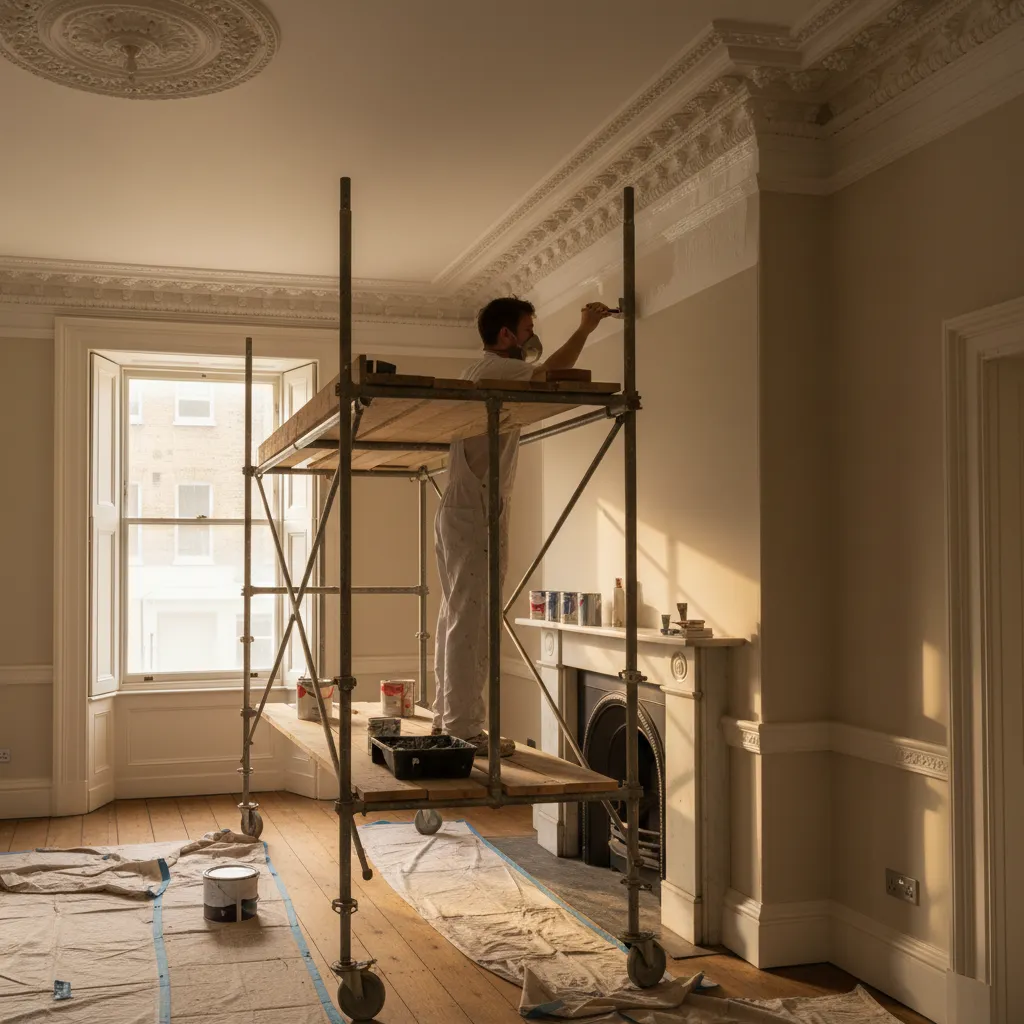
Victorian cornicing is often characterized by its depth and intricate patterns—think egg-and-dart, dental blocks, or floral motifs. In areas like Greenwich and Clapham, where 19th-century architecture reigns supreme, large-scale plaster cornices are essential for maintaining the property’s heritage value.Georgian Simplicity
Contrary to popular belief, earlier Georgian styles were often more restrained and geometric. If you’re lucky enough to live in a Georgian property in Islington or Chelsea, "less is often more." The focus is on clean lines and perfect symmetry.Contemporary Minimalism
For modern developments in the Docklands or renovated warehouses in Hackney, we often recommend "shadow gap" profiles or simple "C" profiles. These provide a sharp, clean finish without the fuss of traditional patterns, complementing the sleek lines of modern feature walls.The Installation Process: Why Precision Matters
Installation is where most DIY attempts fail. Here at The Painters London, we’ve seen it all—gaping mitres, sagging lengths, and coving that "wanders" up and down the wall.
1. Surface Preparation
Original London walls are rarely straight. This is a hard truth. Whether it’s lath and plaster or modern plasterboard, we start by marking a chalk line around the room to ensure a level height. We then "key" the surface—lightly sanding the wall and ceiling where the adhesive will sit—to ensure a permanent bond.2. The Art of the Mitre
Cutting the corners is the most technical part of the job. For internal and external corners, a professional mitre box is essential. We don't just "fill the gaps"; we aim for a tight, wood-to-wood (or plaster-to-plaster) fit. In old Camden houses where the corners aren't a perfect 90 degrees, our team at The Painters London utilizes "scribing" techniques to ensure a seamless joint.3. Adhesive and Fixing
We use high-strength grab adhesives tailored to the material (plaster, duropolymer, or polystyrene). For heavier plaster cornices common in Kensington, we also use galvanized screws or clout nails to hold the piece in place while the adhesive sets, later filling and hiding these fixings so they are invisible to the eye.Painting Your Coving: The TPL Professional Standard
Once the installation is dry and the joints are filled and sanded, the real transformation begins. Painting coving isn't just about slapping on some white emulsion.
Choosing the Right Paint Brand
For high-end results, The Painters London recommends using premium trade paints. Little Greene and Farrow & Ball offer exquisite finishes that interact beautifully with the shadows created by cornicing.* Farrow & Ball Estate Emulsion: Ideal for a traditional, chalky matt finish on the cornice itself. * Dulux Trade Scuffshield: Great for lower-level coving in high-traffic hallways. * Little Greene Intelligent Matt: A robust option for kitchens and bathrooms.
The "Same Ceiling" vs. "Contrast" Debate
A common question we get during colour consultations is whether to paint the coving the same colour as the ceiling or the wall. The Classic Approach: Painting the coving the same white as the ceiling (e.g., All White or Wimborne White* by Farrow & Ball). This makes the ceiling feel higher and the room more airy. * The Contemporary Approach: Painting the coving the same colour as the walls. This creates a "wrapped" feeling, softening the boundaries of the room. This is particularly popular in dark, moody "snugs" in South East London. * The Heritage Highlight: In grand rooms, we occasionally see the coving painted a third, contrasting colour to highlight the intricate plasterwork—though this requires a very steady hand!Step-by-Step Finish Guide
1. Priming: If using new plaster coving, it will "suck" the moisture out of the paint. We apply a plaster sealer or a "mist coat" first. 2. Caulking: We apply a fine bead of flexible acrylic caulk along the top and bottom edges. This prevents the unsightly "black line" or crack that appears when the building naturally moves. 3. Cutting In: Using a high-quality angled sash brush, we cut in the edges first. 4. Two-Coat Minimum: We always apply at least two coats. The intricate bits of a cornice can hide "holidays" (spots you missed), so we check from multiple angles with a work light.Why Choose The Painters London?
Since 2019, The Painters London has been dedicated to providing a premium service that respects the history of London’s architecture. We understand that your home is likely your most valuable asset. Our team doesn't just "paint"; we restore and enhance. From the initial prep work to the final flick of the brush, we treat every Battersea penthouse and Dulwich cottage with the same obsessive attention to detail.
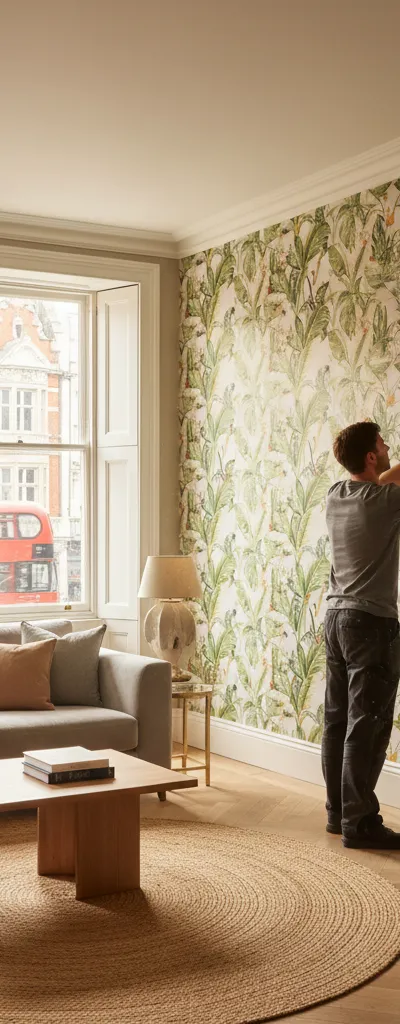
If you are considering a full room refresh, we also offer expert wallpapering services that look stunning when paired with freshly installed cornicing.
Frequently Asked Questions
Can I install coving over wallpaper?
Directly over wallpaper is not recommended. The weight of the coving and the moisture in the adhesive can cause the wallpaper to peel away from the wall, leading to the coving falling down. Our team at The Painters London always recommends removing a strip of wallpaper where the coving will be fixed to ensure a secure bond to the plaster.Is plaster coving better than polyurethane (Duropolymer)?
Plaster is the traditional choice and is "the real deal" for period properties. However, modern high-density polymers (like those from Orac Decor) are indistinguishable from plaster once painted, are much lighter, and don't crack as easily with temperature changes. We can install both, depending on your budget and property type.How do I fix cracks in my existing Victorian cornicing?
Small hairline cracks are common in London homes due to traffic vibrations and seasonal shifts. We use flexible fillers and, in some cases, glass fibre tape to bridge the movement. For significant structural cracks, we may recommend a specialist plaster restorer before we begin the painting process.How long does installation and painting take?
For a standard-sized room, installation usually takes one day. We then allow 24 hours for adhesives and fillers to fully cure before returning for two days of meticulous painting and finishing.Ready to Transform Your London Home?
Don’t settle for sagging edges and sloppy brushwork. If you want to elevate your property with professional coving installation and a flawless paint finish, The Painters London is here to help. Our experienced tradespeople serve all of Central and South East London, bringing premium quality to every project.
Contact The Painters London today for a free, no-obligation quote.
Practising London painters & decorators since 2019 — every guide is written and reviewed by our working team. About the authors →