Turning the Tide: Damp-Proof Painting for London Basements
Living in London, space is the ultimate luxury. Whether you are in a Victorian townhouse in Kensington, a converted warehouse in Bermondsey, or a family home in Dulwich, the basement often represents the final frontier for expansion. However, London’s geography—built largely on clay and subject to a high water table—means that "below-ground" living comes with a specific set of challenges: namely, dampness, condensation, and salt efflorescence.
At The Painters London, we’ve spent years transforming subterranean spaces from musty storage rooms into high-end cinema rooms, home offices, and luxury guest suites. But a beautiful finish is only as good as the preparation and the products used beneath it. Unlike a standard bedroom or living room, a London basement requires a specialist approach to painting and decorating to ensure your investment doesn't literally peel off the walls within six months.
In this guide, we’ll explore the professional-grade solutions for damp-proof painting and how to achieve a premium finish that stands up to the unique humidity of London’s lower levels.
Understanding the Enemy: Why London Basements Get Damp
Before we even open a tin of Little Greene or Dulux Trade, we have to understand what we are dealing with. Damp in London basements typically falls into three categories:
1. Penetrating Damp: This is where moisture from the surrounding earth seeps through the masonry. Given London’s heavy clay soil, which retains water like a sponge, hydrostatic pressure can push moisture through the smallest cracks in old brickwork. 2. Rising Damp: Common in older properties in areas like Chelsea and Greenwich, where the original damp-proof course (DPC) has failed or was never present. 3. Condensation: The most common culprit. In the cooler environment of a basement, warm air from the rest of the house hits cold wall surfaces, turning into water droplets. This leads to the dreaded black mould.
If you are dealing with active leaks or flooding, you need a specialist tanking company. However, if you are looking to refresh a basement that is "structurally sound but prone to moisture," that is where The Painters London excels.
The Secret is in the Prep: The Painters London Way
You cannot simply paint over damp. It is a golden rule in the decorating trade. If you apply a standard emulsion over a damp patch, you are essentially trapping moisture, which will eventually bubble the paint film.
1. Salt Neutralisation
Many London properties use London Stock bricks, which are porous. When moisture travels through them, it carries salts. When the water evaporates, it leaves "white fluff" (efflorescence). Our team at The Painters London ensures these salts are chemically neutralised before any paint is applied. If this step is skipped, the salts will continue to expand and push your new paint off the wall.2. Specialist Anti-Damp Primers
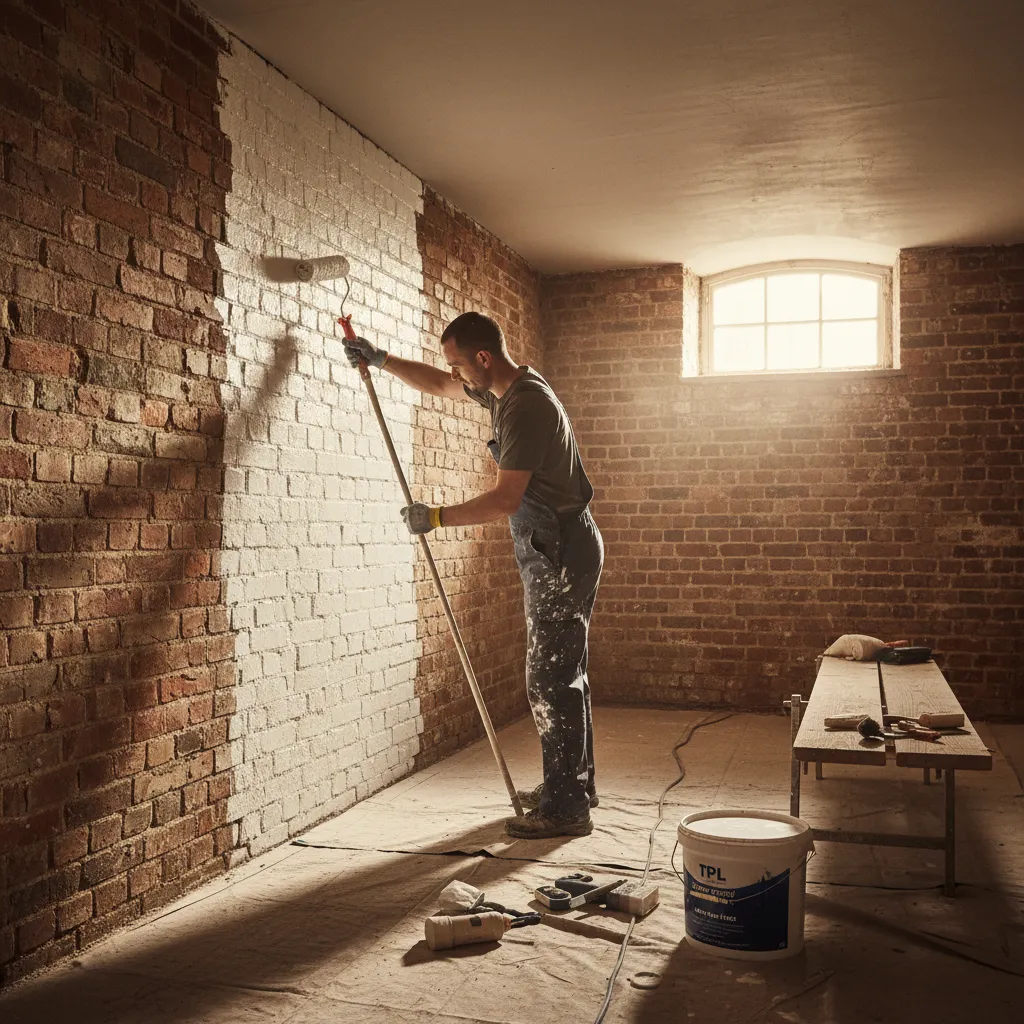
We don't use "DIY-grade" damp sealers. For high-end London interiors, we utilise professional-strength primers such as Zinsser Watertite or Aga Coating Systems. These products are designed to withstand significant hydrostatic pressure and can even be applied to slightly damp surfaces (though dry is always preferred).3. Addressing Mildew
In areas like Battersea and Clapham, where many basements serve as utility rooms or gyms, mould is a frequent guest. Before decorating, we treat all surfaces with a high-strength fungicidal wash to kill spores at the root.Choosing the Right Paint: Style Meets Science
Once the substrate is stable and sealed, we move on to the aesthetics. For a luxury basement, you want a finish that looks like a high-end living room but performs like an exterior shield.
Breathable vs. Impermeable
There are two schools of thought. In many period properties, particularly those with traditional lime plaster, "breathability" is key. Brands like Farrow & Ball offer "Limewash" or "Casein Distemper" which allow moisture to pass through the paint rather than trapping it. This is often the best choice for listed buildings in Westminster or Hampstead.However, for modern basement conversions with a full tanking system and cavity drain membranes, we often recommend high-performance scrubbable matt finishes. Little Greene Intelligent Matt Emulsion is a personal favourite at The Painters London. It provides the rich pigment density London homeowners love, but it is technically robust enough to handle the higher humidity levels found below ground.
Light-Reflecting Finishes
Basements are naturally darker. While it’s tempting to go for a gloss to reflect light, this can highlight imperfections in masonry walls. The Painters London recommends using "Clean White" or "Light Grey" tones in a flat matt finish to diffuse what little natural light enters through lightwells. If you’re looking for specific colour inspiration, check out our guide on the best white paint for London flats.Professional Application Techniques
A basement isn't the place for a quick "one coat" job. Because the environment is naturally more humid, paint takes longer to cure.
* Thin Coats: We apply multiple thin coats rather than one thick one. This ensures each layer bonds correctly to the specialist primer. * Air Circulation: During the project, we use industrial fans and dehumidifiers to manage the local environment. This is a crucial step that many amateur decorators overlook, leading to "surfactant leaching" (streaky marks on the paint). * Cutting In: Precision is everything. In tight basement spaces with low ceilings, the quality of the "cut" at the ceiling line and around skirting boards defines the professional look.
Beyond the Walls: Woodwork and Metalwork
Don't forget the details. Basements often feature exposed cast iron pillars or structural timber beams. These also need protection.
* Metalwork: In industrial-style conversions in East London, we use specialist metal primers to prevent rust from bleeding through into the topcoat. * Woodwork: For staircases and banisters, we suggest high-durability eggshell finishes. These are more resistant to the "touch-damp" feel that timber can sometimes get in lower-ground floors.
Why Hire Professional Painters and Decorators in London?
Basement painting is high-risk. If it goes wrong, the cost of stripping the paint and starting again is significantly higher than doing it right the first time. The Painters London brings the expertise required to assess the moisture levels of your walls before a single drop of paint is spilled. We understand the specific architecture of London homes, from the Regency terraces of Islington to the modern apartments of Nine Elms.
By choosing a professional team, you aren't just paying for the color on the wall; you are paying for the peace of mind that your basement will remain beautiful, mould-free, and healthy for years to come.
Frequently Asked Questions
Can I paint over a damp patch in my basement?
Technically, yes, but it will fail. You must first identify the source of the damp. If it is just surface condensation, you can clean it and use an anti-mould paint. If it is penetrating damp, you must use a specialist damp-proof primer like Zinsser or a tanking slurry before applying a decorative topcoat.What is the best paint for a basement with no windows?
The Painters London recommends using a high-quality light-reflecting emulsion. Brands like Dulux Trade have specific "Light+Space" ranges, but a classic "All White" from Farrow & Ball also works beautifully. Ensure the paint has a "scrubbable" rating so you can easily wipe away any marks without damaging the finish.How long does it take for basement paint to dry in London's climate?
Due to the naturally higher humidity and cooler temperatures in London basements, drying times can be double what they are upstairs. While a coat might be "touch dry" in 4 hours, we usually allow 24 hours between coats to ensure the polymer chains in the paint have fully bonded.Should I use a dehumidifier after painting my basement?
Yes, but with caution. You don't want to pull moisture out of the paint too quickly, as this can cause cracking. However, running a dehumidifier on a low setting 48 hours after the final coat is a great way to help the paint cure and prevent immediate "new paint" smells from lingering in a windowless space.Your London Basement Transformation Starts Here
Ready to turn your dark, damp basement into a stunning living space? Whether you need a specialist interior painting service or a complete decorative overhaul, our team is here to help. We cover all of Central and South East London, providing bespoke solutions for the city's most challenging spaces.
Contact The Painters London today for a free, no-obligation quote.
--- Related Services: * Residential Interior Painting * Wallpapering for Feature Walls * Exterior Weatherproofing
Practising London painters & decorators since 2019 — every guide is written and reviewed by our working team. About the authors →