Expert Interior Painting Tips for London Period Homes
Living in a period property is a hallmark of the London lifestyle. Whether you own a towering Georgian terrace in Kensington, a sturdy Edwardian semi in Dulwich, or a charming Victorian cottage in Greenwich, these buildings possess a character that modern builds simply cannot replicate. However, with great character comes great responsibility—specifically when it comes to interior decoration.
The lime plaster, intricate mouldings, and unique light conditions of London homes require a specialized approach. At The Painters London, we have spent years refining the art of decorating these historic spaces. If you are planning a refresh, following the right techniques is the difference between a finish that looks "DIY" and one that exudes premium quality.
Understanding the 'Breathability' of Period Properties
One of the biggest mistakes we see when called into homes in Chelsea or Battersea is the use of modern, plastic-based paints on historic masonry. Most London homes built before 1919 were designed to breathe. They use lime mortar and porous bricks that allow moisture to move through the walls.
If you seal these walls with heavy, non-breathable vinyl matt paints, you risk trapping moisture behind the paint film. This leads to "blown" plaster, bubbling paint, and dampness. The Painters London recommends using traditional finishes or high-quality breathable modern equivalents like Little Greene’s Intelligent Matt or Farrow & Ball’s Estate Emulsion for older walls. These brands offer the depth of pigment required for heritage homes while respecting the building's structural integrity.
Surface Preparation: The London Challenge
You’ve likely heard it before, but in a period home, preparation isn't just 50% of the job—it’s 80%. London properties are subject to the constant vibration of the Underground and heavy city traffic, which causes fine hairline cracks to reappear year after year.
Managing Lath and Plaster
Many homes in Clapham and Hampstead still feature original lath and plaster walls. These are flexible but fragile. Before you even open a tin of paint, you must check for "bossed" or loose areas. If the plaster sounds hollow when tapped, it may need stabilizing. Our team at The Painters London always ensures that cracks are raked out, filled with high-flexibility fillers, and often lined with a high-grade lining paper to provide a smooth, reinforced canvas.The Power of Lining Paper
For the ultimate finish in a Victorian or Georgian property, we often suggest professional wallpapering techniques using 1200 or 1400-grade lining paper. This "bridges" small imperfections and provides a uniform absorbency across the wall, which is essential if you are using dark, high-pigment heritage colours.Navigating the 'London Light'
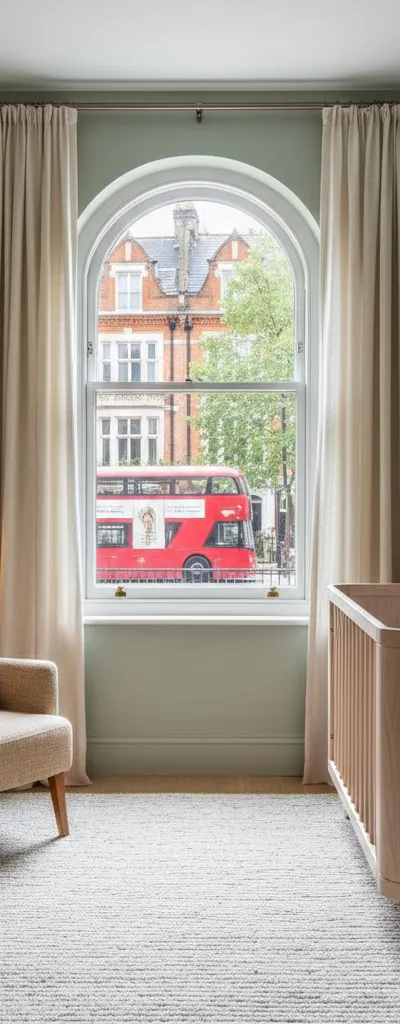
Light in London is notoriously fickle. A colour that looks like a warm stone in a showroom can look like a cold grey in a North-facing ground-floor flat in Islington.
North-Facing Rooms
If your room faces North, it will receive a cool, bluish light. Avoid any paints with a green or grey base, as they will feel chilly. Instead, look for shades with yellow or red undertones. The Painters London often suggests colours like Joa’s White or Setting Plaster by Farrow & Ball to bring warmth to these spaces.South-Facing Rooms
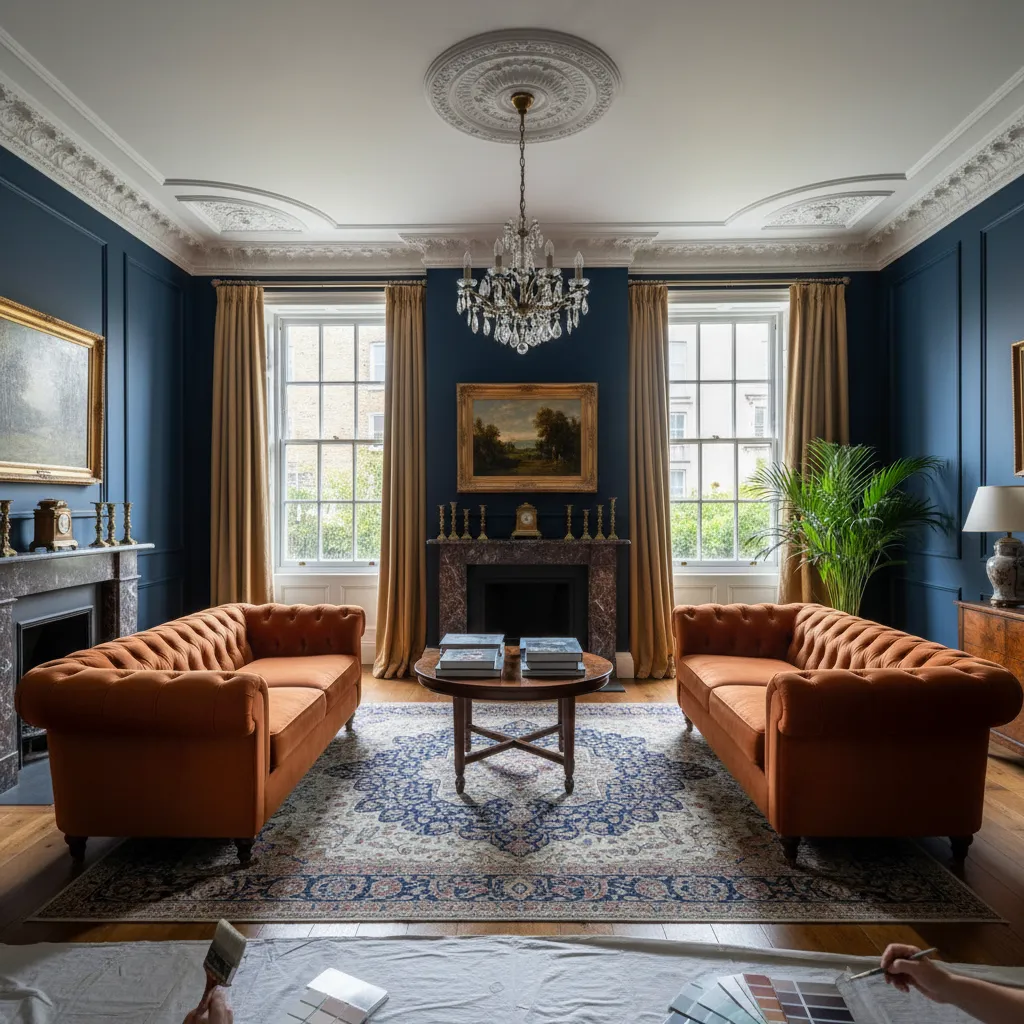
These rooms are a decorator's dream, bathed in strong light for much of the day. You can afford to be bold here. Deep blues, forest greens, or even crisp, cool whites work beautifully. When we work on interior painting projects in sunny Richmond or Wimbledon villas, we often use the light to showcase the depth of Hicks' Blue or Invisible Green from Little Greene.Painting Period Woodwork: Traditional vs. Modern
The skirting boards, architraves, and window shutters in a London period home are often its most beautiful features. Deciding on the finish is key.
The Satin vs. Gloss Debate
While high-gloss was the standard for decades, modern tastes have shifted towards Satin or Eggshell finishes. These have a softer sheen (usually 10-20%) that hides the dings and dents common in 100-year-old timber. For a truly authentic look, "Dead Flat" finishes are becoming increasingly popular for woodwork, allowing the colour to flow seamlessly from the wall onto the trim.Dealing with "Tobacco Staining"
Many older properties in Central London have decades of soot or nicotine embedded in the woodwork. If you don't use a high-quality stain-blocking primer, such as Zinsser B-I-N or Dulux Trade Primer Undercoat, those yellow stains will bleed through your beautiful new topcoat within weeks. Our house painting London experts never skip this step.Highlighting Architectural Details
The intricate plasterwork found in ceiling roses and cornices is what sets these homes apart. The Painters London recommends a "tone-on-tone" approach rather than the traditional "brilliant white" ceiling.
By painting your cornice the same colour as your walls, you can make a room feel taller and more cohesive. If you prefer a contrast, choose a "weighted white"—a white that has a drop of the wall colour in it. This prevents the ceiling from looking too "stark" against the heritage palette. If you are looking to add some drama, consider a feature wall that incorporates the moulding as a frame for a deeper hue.
Why Professional Application Matters
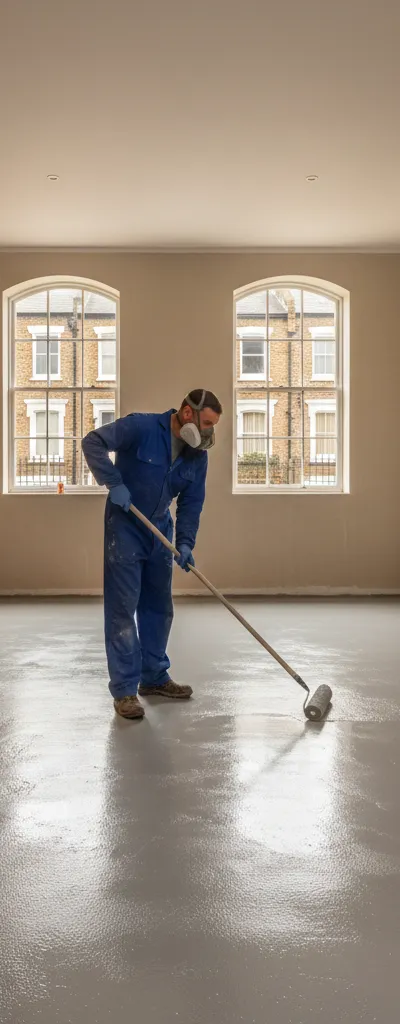
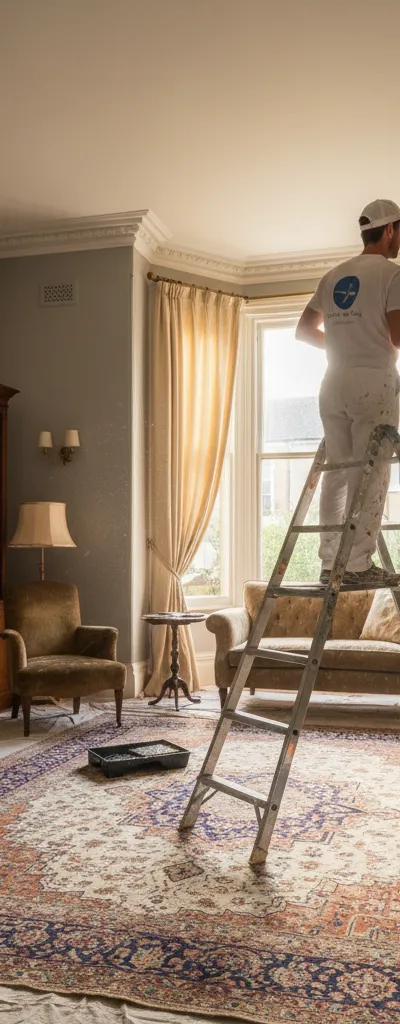
While DIY is tempting, the scale of London period homes—with their high ceilings and complex sash windows—often makes professional intervention a smarter investment. Professional painters and decorators London like our team have the scaffolding, industrial dust extraction, and high-end spray equipment needed to achieve a "flawless" finish that lasts for years.
Frequently Asked Questions
Do I need to strip the old paint from my Victorian shutters?
Not necessarily. If the paint is sound and not flaking, a thorough sand and prime are usually sufficient. However, if there are thick layers of "clogged" paint obscuring the carved details, heat-stripping or chemical stripping may be required to restore the original profile of the wood.Which paint brand is best for high-traffic hallways?
For busy London hallways, especially those with kids or pets, we recommend Dulux Trade Scuffshield or Little Greene Intelligent Matt. These offer a beautiful flat finish but are incredibly durable and can be scrubbed clean without leaving "burnish" marks on the paint.How long does it take to paint a three-bedroom period house?
Typically, a full interior repaint for a three-bedroom Victorian terrace takes between 10 to 15 working days. This allows for the extensive preparation required for older surfaces and the necessary drying times between coats of premium pigment-rich paint.Partner with The Painters London
Your home is likely your most valuable asset. Treating it with the respect it deserves requires a team that understands the nuances of London’s historic architecture. From the initial colour consultation to the final brushstroke, The Painters London provides a premium service tailored to the city's finest postcodes.
Ready to transform your period property? Contact The Painters London today for a detailed quotation and expert advice on your next project.
Explore our full range of interior painting services or see the areas we cover across Central and South East London.
Practising London painters & decorators since 2019 — every guide is written and reviewed by our working team. About the authors →