Painting Listed Buildings in London: Navigating Regulations
London’s architectural landscape is one of the most prestigious in the world. From the towering white stuccos of Kensington to the atmospheric Georgian terraces of Greenwich, owning a piece of history is a privilege. However, when it's time to refresh the aesthetic of a heritage property, it isn't as simple as picking up a brush and a tin of paint from the local DIY shop.
If your property is Grade I, Grade II*, or Grade II listed, you are effectively a custodian of British history. This means the local planning authority has a say in what you can and cannot do to your home. At The Painters London, we’ve spent years working on these protected structures across Chelsea, Battersea, and Dulwich, ensuring that every stroke of the brush respects both the law and the building's soul.
In this guide, we’ll break down the complex regulations surrounding painting listed buildings in London and how to ensure your project stays on the right side of the law.
Understanding Listed Building Consent (LBC)
The first question every London homeowner asks is: "Do I need permission to paint my house?"
The answer, frustratingly, is: "It depends."
While routine maintenance generally doesn't require Listed Building Consent (LBC), any work that "affects the character of the building as a building of special architectural or historic interest" does. This is where it gets grey. Changing the colour of your exterior masonry from cream to charcoal in a historic Clapham terrace will almost certainly require LBC. Even changing the brand of paint or the finish (from matte to gloss) can sometimes trigger the need for a permit if it's deemed a significant departure from the original.
The Painters London recommends checking with your local council's Conservation Officer before starting any exterior painting project on a listed property. Failing to obtain consent is a criminal offence, and the "rectification notices" issued by councils can be incredibly costly to resolve.
Interior vs. Exterior: Where the Rules Differ
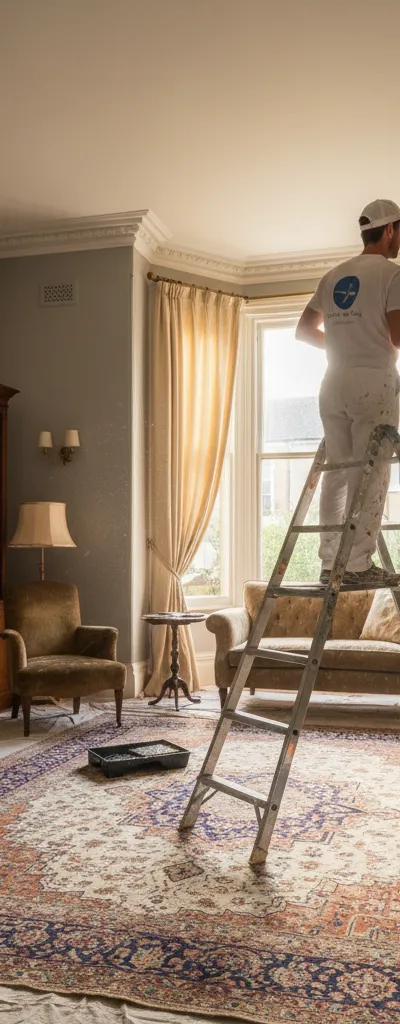
Generally, interior painting is more flexible, provided you aren't covering up original features like 18th-century murals or rare panelling. However, if your interior involves historic lath-and-plaster walls or ornate lime-based cornicing, using an modern, impermeable paint can be seen as "damage" to the fabric of the building.
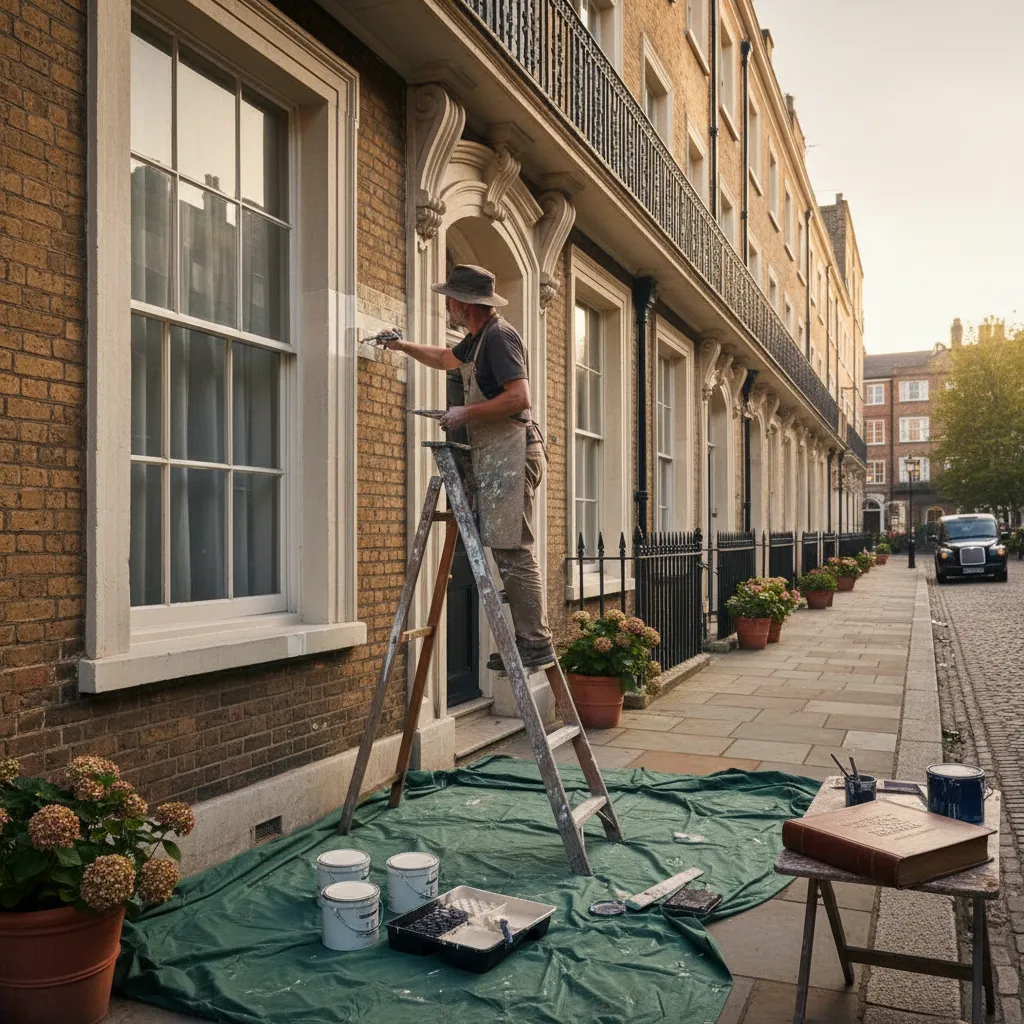
Exterior work is much more strictly regulated because it impacts the "public realm" and the unified look of a street or square. In areas like the Royal Borough of Kensington and Chelsea, the colour palette is often strictly enforced to maintain the iconic "London look."
The Science of Breathability: Choosing the Right Paint
This is where many "general" decorators fall down. You cannot treat a 200-year-old wall like a modern brick cavity wall.
Historically, London buildings were constructed with lime mortars and porous bricks designed to "breathe." Moisture travels through the walls and evaporates. If you apply a modern, high-plasticity acrylic paint to these surfaces, you trap that moisture. Over time, this leads to blown plaster, dampness, and timber rot.
Why We Use Premium Heritage Brands
When working on listed properties, our team at The Painters London exclusively uses heritage-approved ranges. These paints are formulated to be vapor-permeable while providing the depth of colour required for high-end finishes.
1. Little Greene (Limewash & Distemper): For true period authenticity, especially on external render or internal lime plaster, Little Greene’s traditional distempers are unbeatable. 2. Farrow & Ball (Estate Emulsion): Known for its high pigment content and chalky finish, this is the gold standard for interior painting in period homes. 3. Dulux Trade (Heritage Range): A more durable option for high-traffic areas that still respects the historical colour palettes of different eras.
Surface Preparation in Historic Contexts
In a modern home, preparation involves a quick sand and some filler. In a listed building in Mayfair or Hampstead, it is a delicate restoration process.
Historically, layers of lead-based paint may exist. At The Painters London, we take health and safety seriously, using specialized dust extraction and testing kits to ensure old layers are handled without releasing toxic particles into your home.
Furthermore, we avoid over-sanding delicate woodwork. The "character" of a listed building often lies in the slight imperfections and the "fat" layers of old paint on a Victorian banister. Stripping everything back to a "factory finish" can actually strip away the building's value. We focus on stabilization and aesthetic refinement, preserving the history beneath the new coat.
Working with Conservation Officers
In London’s more conservative boroughs, like Westminster or Richmond, you may be asked to provide "paint scrapes" or sample patches for a Conservation Officer to inspect.
They want to see that the new colour matches the historical precedent of the area. For example, if you live in a Georgian townhouse, they may insist on a specific shade of "Off-White" or "Stone" rather than a modern "Brilliant White." The Painters London can help facilitate this process by applying samples to the substrates for official approval before the full project commences.
Common Pitfalls to Avoid
* Ignoring the Windows: Many homeowners think they can paint their timber sash windows any colour. In many London conservation areas, white or off-white is the only permitted colour for external joinery. * Painting Unpainted Masonry: If your brickwork has never been painted, you will almost never get permission to paint it. This is considered an irreversible change. * Using Modern Fillers: Using hard, modern fillers in soft lime mortar or flexible wood can cause cracking as the building naturally shifts. We use traditional materials like linseed oil putty and lime-based fillers.
Why Specialist Knowledge Matters
Painting a listed building isn't just about making it look pretty; it's about building maintenance and legal compliance. The Painters London has been serving Central and South East London since 2019, and our reputation is built on understanding the nuances of these historic postcodes.
Whether it’s a Grade II listed cottage in Dulwich Village or a grand apartment in Belgravia, we bring a master-craftsman approach to every project. We understand that your home is likely your most valuable asset, and we treat it with the reverence it deserves.
We can also assist with related heritage services, such as wallpapering using traditional patterns or creating bespoke feature walls that complement your home's historical architecture.
Frequently Asked Questions
Do I need planning permission to paint the inside of my listed building?
Usually, no. Standard internal decorating like painting walls doesn't require LBC. However, if you plan to paint over historic timber panelling, stone features, or rare decorative ceilings that are specifically mentioned in the listing description, you must seek advice first.Can I change the colour of my front door if my house is listed?
In many cases, yes, but it is subject to the specific rules of your local Conservation Area. Some streets in London have "Article 4 Directions," which restrict even the colour of front doors to maintain a uniform streetscape. Always check with your council or consult with The Painters London for advice on local precedents.What happens if I paint my listed building without consent?
It is a criminal offence to carry out works that affect the character of a listed building without consent. The local authority can issue an enforcement notice requiring you to revert the building to its original state at your own expense. This can involve costly specialist paint removal that could have been avoided with proper planning.Why is lime-based paint better for old London houses?
Most London houses built before 1900 were designed to manage moisture through evaporation. Lime-based paints and traditional distempers are "breathable," meaning they allow water vapour to pass through. Modern "plastic" paints seal the wall, which leads to trapped moisture, peeling paint, and eventual damage to the structure.---
Expertise You Can Trust
Navigating the complexities of heritage property maintenance requires a partner who understands the rules as well as the craft. If you are looking to restore the beauty of your historic home in Kensington, Greenwich, or anywhere across London, we are here to help.
Get in touch with The Painters London today for a professional consultation and quote. Let’s ensure your listed building remains a landmark for generations to come.
Explore our full range of services or see which areas we cover to find out how we can transform your London property.
Practising London painters & decorators since 2019 — every guide is written and reviewed by our working team. About the authors →