Common Decorating Pitfalls: Painting Mistakes to Avoid in London Homes
Whether you are refreshing a Georgian townhouse in Chelsea, modernising a Victorian terrace in Dulwich, or giving a sleek Battersea penthouse a new lease of life, the temptation to "DIY" your interior can be strong. However, London properties present unique challenges that can quickly turn a weekend project into a costly headache. From the way our northern light interacts with certain pigments to the structural quirks of period masonry, there is a lot that can go wrong.
At The Painters London, we spend a significant amount of our time rectifying mistakes made by either well-meaning homeowners or less experienced tradespeople. To help you achieve a high-end finish that lasts, we’ve compiled our professional insights on the most frequent painting errors we see across the capital.
1. Ignoring the "London Light" Problem
One of the biggest mistakes we see in Kensington and Notting Hill is choosing a paint colour based on how it looked in a sunny showroom or on an Instagram grid.
London’s light is notoriously cool and often grey. If you have a north-facing room in a tall, narrow Victorian property, a "cool grey" paint like Farrow & Ball's Cornforth White might look beautifully sophisticated in the shop, but it can turn into a clinical, cold blue once applied to your walls.
How to avoid it:
The Painters London recommends always testing samples on different walls of the room. Observe how the colour shifts at 10 AM, 3 PM, and under your evening artificial lighting. For north-facing London rooms, look for paints with warm yellow or red undertones to counteract the blueish natural light.2. Inadequate Surface Preparation
In the rush to see a transformation, many homeowners skip the most critical stage: prep. In older properties in areas like Greenwich or Highgate, walls have often seen decades of movement, heat cycles, and layers of wallpaper.
Painting over cracks, loose flaky paint, or greasy kitchen walls is a recipe for disaster. The new paint won't bond effectively, leading to peeling and "alligatoring" within months.
The Professional Approach:
Our team at The Painters London spends roughly 60-70% of any project duration on preparation. This includes: * Degreasing walls thoroughly, especially in kitchens. * Raking out and filling cracks with high-quality flexible fillers. * Sanding between every single coat to ensure a "glass-like" finish. * Using specialist primers on "thirsty" plaster or slick surfaces.3. Using the Wrong Paint Finish for the Room
We often encounter beautiful Clapham family homes where a flat matt finish has been used in a high-traffic hallway or a steamy bathroom. While a deep matt looks stunning and hides wall imperfections, it is notoriously difficult to clean.
The Mistake:
Using a standard clay-based matt in a narrow London hallway where bikes, prams, and muddy dogs are a daily occurrence will result in scuffs that cannot be wiped away. Conversely, using a high-sheen gloss on uneven, original Victorian walls will highlight every bump and blemish.The Solution:
For high-traffic areas, The Painters London recommends "Durable Matt" or "Scuff-Shield" ranges from brands like Dulux Trade or Little Greene's Intelligent Matt. These offer the aesthetic of a flat finish with the washability of an eggshell.4. Underestimating the "Thirsty" Nature of New Plaster
If you’ve recently had an extension or a loft conversion in Wandsworth, your new walls are likely covered in fresh pink plaster. A common mistake is applying your expensive designer topcoat directly onto this new surface.
New plaster is incredibly porous. It will suck the moisture out of the paint so quickly that the paint can't "level out," leaving you with visible brush marks and a patchy finish. Furthermore, the paint may eventually peel off in large sheets.
The Pro Tip:
Always use a "mist coat"—a diluted layer of cheap white emulsion (usually 70% paint to 30% water)—to seal the plaster first. Alternatively, use a specialist "New Plaster Primer." This ensures your final feature wall looks professional and stays adhered to the substrate.5. Neglecting Exterior Masonry in London's Climate
London’s weather is a mix of damp winters and increasingly hot summers, paired with urban pollution. We often see South East London properties where the exterior masonry has been painted with cheap, non-breathable paint.
In older brick properties, moisture needs to escape. If you use a "plastic-like" masonry paint, you trap that moisture. When it freezes in winter, it expands, causing the paint to bubble and the underlying masonry to "spall" or crumble.
What to do instead:
For exterior painting in London, always opt for breathable, mineral-based paints or high-quality systems like Keim or Little Greene’s Intelligent Masonry. These are designed to let the building breathe while repelling the UK's driving rain.6. Buying Budget Brushes and Rollers
You can buy the most expensive tin of Farrow & Ball in the world, but if you apply it with a £2 brush from a bargain bin, it will look like a budget job. Cheap brushes shed bristles into your wet paint and create "tramlines" in the finish. Low-quality rollers "splatter" paint everywhere and leave an inconsistent orange-peel texture.
The Specialist Choice:
Here at The Painters London, we invest in professional-grade tools. We use synthetic brushes for water-based paints and natural bristles for oils to ensure the smoothest possible flow. If you are DIY-ing, at least invest in a "medium pile" microfibre roller for your walls—it makes a world of difference to the opacity and texture.7. Working Against the Architecture
London is a city of stunning period architecture, from Georgian symmetry to Edwardian grandeur. A common decorating mistake is "fighting" the features of the room. This might mean painting original coving and cornicing the same dark colour as the walls in a room with low ceilings, which can make the space feel oppressive.
Our Recommendation:
The Painters London often advises clients on how to use "tonal shifts." Instead of a stark brilliant white on the woodwork (which can look cheap against heritage wall colours), try a "closeness" of colour. Use a shade only two steps lighter than your wall colour for the coving and skirting to create a sense of height and cohesion.8. Taping Everything and Leaving It Too Long
Masking tape is a great tool, but it’s often the cause of the very mess it’s supposed to prevent. If you leave masking tape on until the paint is bone dry, you will likely "rip" the edge of your new paint when you pull it off, leaving a jagged line.
The Correct Method:
Remove your tape while the paint is still slightly tacky, or "score" the edge very gently with a sharp craft knife before pulling. Even better, practice the art of "cutting in" by hand. Our decorators at The Painters London rarely rely on tape for long runs; a steady hand and a high-quality angled brush produce a much sharper line.9. Forgetting the "Fifth Wall" (The Ceiling)
In many Islington or Richmond apartments, the ceiling is an afterthought, usually slapped with a coat of "contract matt white." However, brilliant white can often be too "harsh" and blue-toned, making the room feel shorter.
The Design Hack:
Consider "colour drenching," where the walls, woodwork, and ceiling are all painted in the same hue (perhaps in different finishes). Alternatively, choose an "off-white" with a hint of the wall colour to soften the transition. It eliminates that harsh "halo" effect at the top of the room.---
Frequently Asked Questions
Why is my paint peeling off the walls in my London Victorian house?
Peeling is usually caused by poor adhesion. In older London homes, this is often due to painting over "distemper" (an old type of paint), dampness in the walls, or failing to prime a previously glossy surface. The Painters London can assess your walls to determine if a specialist "stabilising primer" is required.How long should I wait between coats of paint?
Even if the paint feels dry to the touch in 30 minutes, it hasn't necessarily "cured." In London's often humid climate, we recommend waiting at least 4 hours for water-based paints and 16-24 hours for oil-based paints before recoating. Rushing this leads to "dragging" the first coat.Can I paint my London exterior in the winter?
It is not recommended. Most masonry paints require a temperature of at least 8°C and rising to dry properly. Furthermore, the high humidity in London winters prevents the paint from bonding. We generally schedule exterior projects between April and October for the best results.Is professional painting worth the cost in London?
While DIY saves on labour, a professional finish adds genuine value to your property. The Painters London uses trade-grade materials and techniques that ensure longevity. When you factor in the cost of tools, high-end paint, and the time taken to fix mistakes, hiring a specialist often proves more cost-effective in the long run.---
Ready to transform your London home without the stress?
Avoid the pitfalls and ensure a flawless finish for your property. Whether you need a full interior refresh or expert advice on wallpapering, our team is here to help.
Contact The Painters London today for a free, no-obligation quote and let our expert decorators bring your vision to life across all London areas.
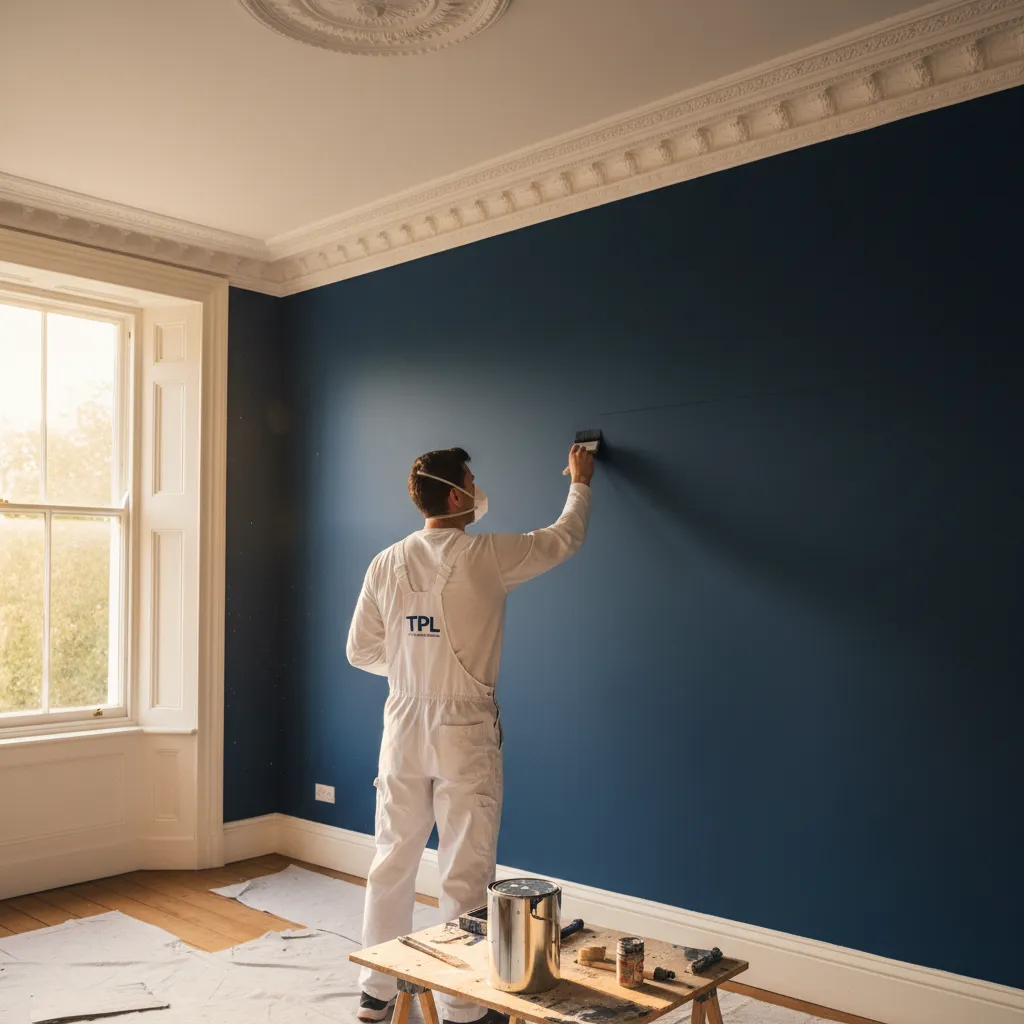
--- Image Description: A professional decorator from The Painters London carefully "cutting in" a dark navy feature wall against a white ornate ceiling in a Kensington period property.
Practising London painters & decorators since 2019 — every guide is written and reviewed by our working team. About the authors →