The Art of Staircase and Banister Refurbishment in London
In many of the grand Victorian terraces of Dulwich or the sleek contemporary conversions in Battersea, the staircase isn't just a functional way to get from the ground floor to the bedrooms; it is the architectural spine of the home. However, because it is the highest-traffic area in any property, it is often the first place to show signs of wear and tear. Scuffed skirting boards, chipped handrails, and yellowing spindles can quickly make a beautiful home feel neglected.
At The Painters London, we believe that a professionally painted staircase is one of the most impactful interior painting projects you can undertake. It’s the first thing guests see when they step into your hallway and the last thing you touch before going to bed. But painting a staircase is notoriously difficult—it requires meticulous preparation, the right choice of durable finishes, and a steady hand for those intricate banister spindles.
In this guide, we’ll walk you through how to transform your staircase from a tired thoroughfare into a stunning design feature.
Why Professional Staircase Painting is a London Homeowner’s Best Investment
Many homeowners in Kensington and Chelsea initially consider staircase painting as a DIY project, only to realize the sheer scale of the task. Unlike a flat wall, a staircase is full of awkward angles, varying surfaces (wood, metal, and plaster), and requires a finish that can withstand the literal "stampede" of daily life.
The Painters London recommends looking at your staircase as an opportunity to introduce character. Whether you are looking for a classic heritage look using Farrow & Ball shades or a high-durability modern finish from Dulux Trade, the right application can add significant value to your London property.
Assessment and Preparation: The Secret to Longevity
You cannot simply slap a coat of paint over old varnish and expect it to last. In older properties found in Greenwich or Clapham, banisters are often coated in decades of wax, oils from hands, and thick layers of lead-based paint.
1. Degreasing: We start by cleaning every inch of the wood with sugar soap or a specialist degreaser. This is vital for the handrail, which accumulates oils from skin that prevent paint from adhering. 2. Sanding: This is the most labor-intensive part. We use dustless sanding systems to key the surface. For the intricate spindles common in Victorian homes, this must be done by hand to ensure the new paint doesn't peel. 3. Priming: Not all primers are created equal. If we are painting over dark wood or resinous knots, we use a high-quality shellac-based primer like Zinsser BIN to prevent "bleed-through."
Choosing the Right Colour Palette for London Hallways
The lighting in London homes can be tricky. Narrow hallways in Islington townhouses often lack natural light, while open-plan apartments in Canary Wharf might be flooded with sun.
The Classic Monochrome
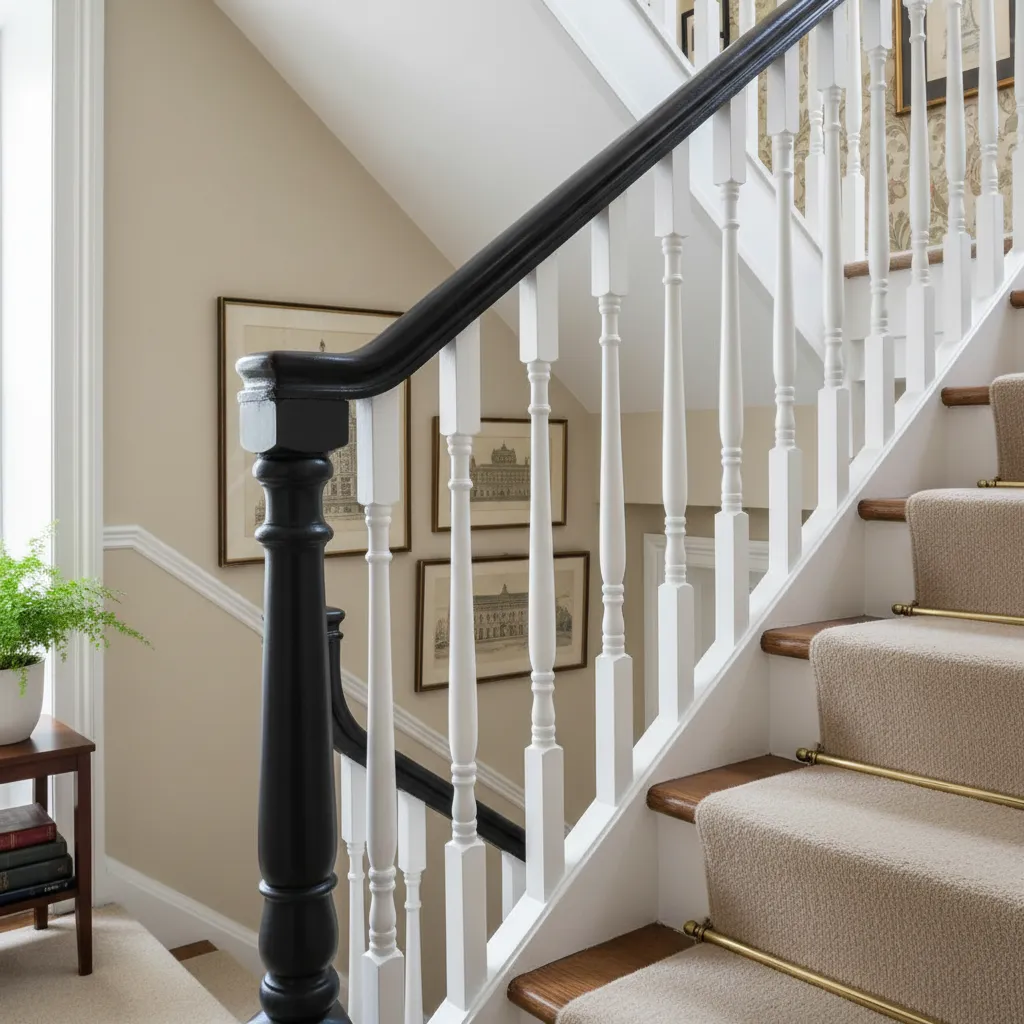
A very popular choice for our clients in Wandsworth is the "Tuxedo" look: crisp white spindles (try Wimborne White by Farrow & Ball) contrasted with a deep black handrail (such as Railings). This creates a sophisticated, timeless aesthetic that frames the staircase beautifully.Deep Heritage Tones
If you want to make a statement, consider painting the entire staircase—stringer, spindles, and handrail—in a single deep hue. Little Greene’s Invisible Green or Hicks' Blue are fantastic choices for adding drama to a large entrance hall.The Two-Tone Modern Look
For a contemporary twist, we often suggest painting the bannister and spindles a dark charcoal while keeping the flights and risers a neutral stone colour. This grounds the staircase and helps hide the inevitable dust that settles on darker steps.Selecting the Best Paint Finishes
At The Painters London, we prioritize durability. A staircase is a high-abrasion zone.
* Handrails: These should always be finished in a hard-wearing Eggshell or Gloss. If you prefer a wood finish, we can strip back the handrail and apply a high-quality wax or Osmo oil to highlight the natural grain. * Spindles and Newel Posts: An Eggshell finish is usually preferred here as it offers a soft sheen that is easy to wipe clean without being overly reflective. Treads and Risers: If you are painting the actual steps, you must* use a dedicated floor paint or a high-traffic enamel. Standard wall paint will fail within weeks. We often recommend Dulux Trade Scuffshield or specialist floor coatings for these areas.
Step-by-Step: How Our Team at The Painters London Approaches your Project
When you book a house painting London service with us, we follow a rigorous process to ensure your home remains livable during the transformation.
1. Protection
Staircases are central. We use heavy-duty floor protection and "zip-walls" if necessary to contain any dust. We ensure your carpets—if they are staying—are completely sealed off.2. Minor Repairs
Over time, spindles can become loose and treads can creak. Before painting, our decorators check for any structural wobbles, filling cracks with high-performance wood filler and securing loose elements.3. The "Cutting In" Phase
This is where the skill of a professional painter and decorator in London really shows. Painting spindles requires a specific technique to avoid "runs" and "drips." We apply multiple thin coats rather than one thick one, ensuring a factory-smooth finish.4. The Finish
Between each coat, we lightly "denib" (fine sand) the surface. This removes any tiny dust particles that may have settled, resulting in a finish that feels as good as it looks.Integrating with Your Overall Decor
A staircase doesn't exist in a vacuum. It should complement your feature walls and any wallpapering you might have in the hallway. If you have a bold patterned wallpaper, a neutral, solid-coloured staircase can provide the necessary visual "rest." Conversely, if your walls are a neutral palette, the staircase is the perfect place to inject a pop of bold colour.
For those living in Bermondsey or Southwark loft conversions, you might have metal banisters. These require specialist metal primers and paints (like Hammerite or specialist Tikkurila coatings) to prevent corrosion and provide a sleek, industrial finish.
Maintenance Tips for Your New Staircase
Once The Painters London has completed your staircase, you'll want to keep it looking pristine. * Cleaning: Use a damp (not soaking) microfibre cloth. Avoid harsh chemical cleaners which can dull the sheen of premium paints. * Touch-ups: We always leave our clients with small "touch-up" pots of the exact paint used. Use a small artist's brush for any minor nicks caused by moving furniture or vacuum cleaners. * No Shoes: It sounds obvious, but encouraging a "no shoes" policy on painted treads will triple the lifespan of the finish.
Why Choose The Painters London?
Since 2019, we have been the go-to choice for homeowners who refuse to compromise on quality. Our experience in period property painting means we understand the nuances of London's unique architecture. From the Georgian heights of Hampstead to the leafy streets of Dulwich Village, we bring precision, cleanliness, and a passion for colour to every project.
We don't just "paint"—we restore and refine. When you choose The Painters London, you are choosing a team that treats your home with the same respect we would our own.
Frequently Asked Questions
How long does it take to paint a staircase?
Typically, a standard staircase takes 3 to 5 days. This allows for thorough preparation, drying times between coats (especially important for durable floor paints), and the intricate work required for spindles.Can I still use my stairs while they are being painted?
Yes, but with coordination. We usually paint spindles and handrails first. If we are painting the treads (steps), we can paint every other step so you can still "hop" up to the bedrooms, or we plan the work for when you might be out of the house for a few hours.Is it better to paint or carpet the treads?
This depends on your style. Painted treads look incredible and are easy to clean, but they can be louder. A popular London trend is to paint the staircase and then install a "runner"—a strip of carpet down the middle—which gives you the beauty of the painted wood on the edges with the comfort and quiet of carpet.Do I need to strip the old varnish off first?
Not necessarily. As long as the varnish is sound and not flaking, our team at The Painters London can use a "bonding primer" after a thorough sand. However, if the old finish is peeling, it must be removed to ensure the new paint doesn't fail.---
Ready to transform your hallway? Contact The Painters London today for a professional consultation and a detailed quote for your staircase and banister painting project.
Get a Quote Today | Explore Our Services | See Our Work in London
Practising London painters & decorators since 2019 — every guide is written and reviewed by our working team. About the authors →